" height="31.24706260921927px" id="nbJgwzqVl" transform="translate(0 0.753)" width="19.57646915609603px"/><path d="M 0 9.964 C 0 4.127 3.418 0 9.783 0 C 16.148 0 19.743 4.186 19.743 9.964 L 19.743 21.283 C 19.743 27.061 16.148 31.247 9.783 31.247 C 3.418 31.247 0 27.12 0 21.283 Z M 7.838 9.551 L 7.838 21.755 C 7.838 23.465 8.663 24.526 9.901 24.526 C 11.138 24.526 11.963 23.465 11.963 21.755 L 11.963 9.551 C 11.963 7.723 11.138 6.721 9.901 6.721 C 8.663 6.721 7.838 7.723 7.838 9.551 Z" fill="rgb(255, 255, 255)" height="31.247058794077702px" id="KjHS4S5x_" stroke-dasharray="" stroke-linecap="butt" stroke-linejoin="miter" stroke-miterlimit="10" stroke-width="0.38" stroke="rgb(255, 255, 255)" transform="translate(16.313 0.753)" width="19.74260705882354px"/><path d="M 0 9.964 C 0 4.127 3.418 0 9.783 0 C 16.148 0 19.743 4.186 19.743 9.964 L 19.743 21.283 C 19.743 27.061 16.148 31.247 9.783 31.247 C 3.418 31.247 0 27.12 0 21.283 Z M 7.838 9.551 L 7.838 21.755 C 7.838 23.465 8.663 24.526 9.901 24.526 C 11.138 24.526 11.963 23.465 11.963 21.755 L 11.963 9.551 C 11.963 7.723 11.138 6.721 9.901 6.721 C 8.663 6.721 7.838 7.723 7.838 9.551 Z" fill="rgb(7, 59, 58)" height="31.247058794077702px" id="MG5ESk6qo" transform="translate(17.762 0.753)" width="19.74260705882353px"/><path d="M 0 1.882 C 0 0.843 0.843 0 1.882 0 L 19.576 0 C 20.616 0 21.459 0.843 21.459 1.882 L 21.459 6.024 L 0 6.024 Z" fill="rgb(255, 255, 255)" height="6.023529411764706px" id="Wezeqb1qb" transform="translate(7.906 25.976)" width="21.458823529411763px"/></svg>)
The Brief That Cannot Fail: How Sleeve Office Works With Brands That Have One Shot
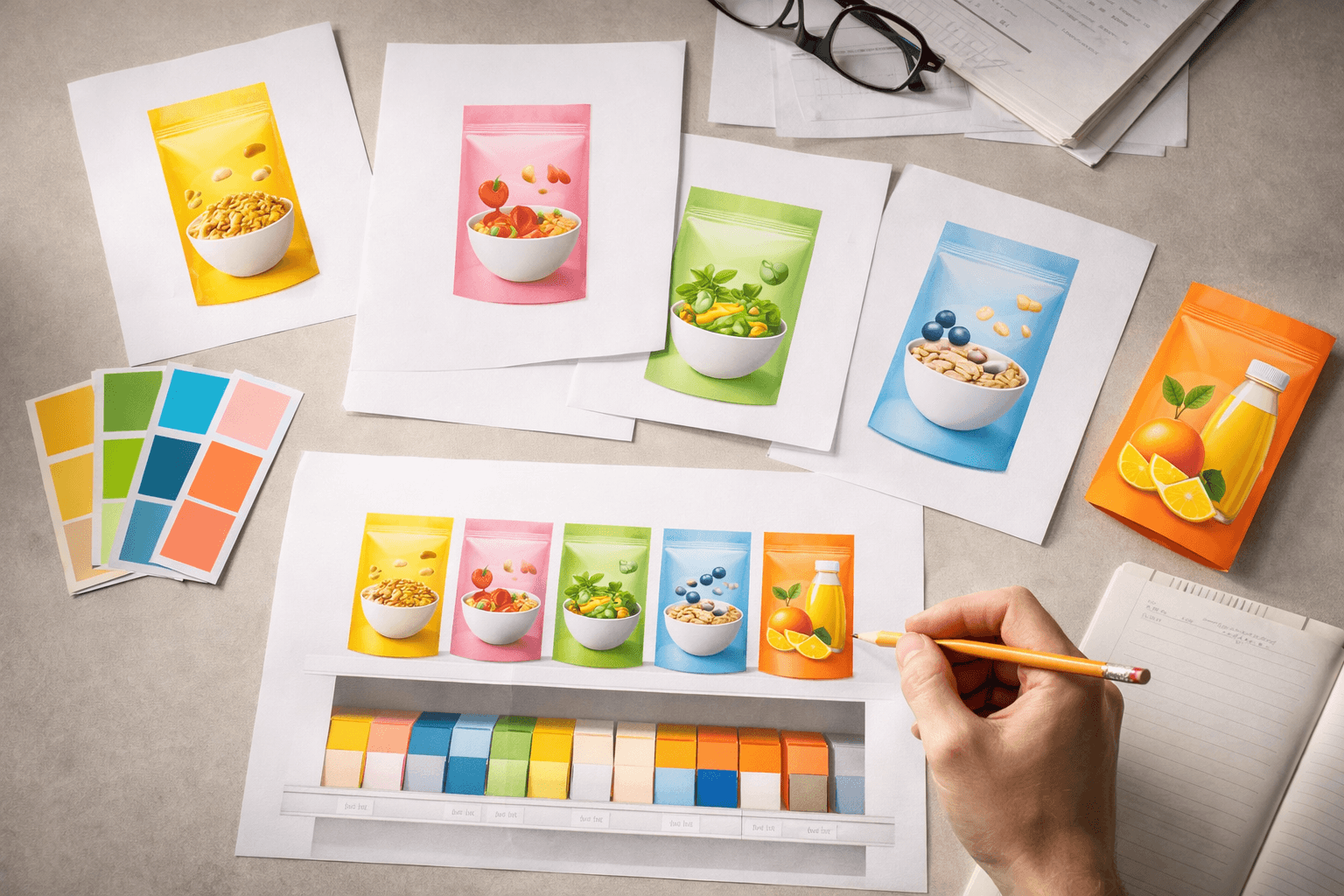
Some packaging briefs are low stakes. The budget exists, the timeline is flexible, and if it doesn't quite work there's another season. Others are not like that at all. A founder going into retail for the first time. A beauty brand launching its hero product. A food startup whose entire business case depends on getting this right. We built Sleeve Office for the second kind of brief. One retail window. One production run. No second chance. Sleeve Office works with brands in exactly this position — starting on the shelf, not in the brief, so every creative decision is grounded in the category reality the shopper is already standing in front of.
Why Some Launches Cannot Afford to Fail
A bootstrapped founder who has negotiated their first major retail listing has not arrived here by accident. They have something at stake that a large brand simply does not: the whole thing.
Research across FMCG categories consistently puts new product failure rates at between 70 and 85% within the first two years. A 12-year analysis of FMCG launches found that only 4.1% of new products were still on shelf after five years. The brands that survived were not necessarily better products. They were better presented — faster to communicate value, clearer at the point of decision.
When there is no budget for a relaunch and no goodwill left with the buyer, the packaging brief has to be right the first time.
What Makes a Brief Unbreakable
A strong brief is the difference between a confident first concept and months of revision that erode the launch window.
Packaging operations specialists at ArtworkFlow identify the most common reason briefs fail: not a lack of information, but a lack of specificity. Phrases like "premium feel" or "eye-catching" mean something different to everyone who reads them. That gap in meaning is where time, money, and launch slots get lost.
An unbreakable brief does four things: it names the commercial objective precisely, defines the target shopper in a specific moment rather than a broad demographic, sets honest parameters around budget and production constraints, and names the competition explicitly. Not to copy them — to know exactly what the packaging is being designed against.
How Sleeve Office Runs Discovery
Most packaging agencies start with the brief. We start with the shelf. Before we look at a client's brief, we study the category their product is entering — who is already there, what they are saying, and what the shopper's eye does when it scans that fixture.
This is not background research. It is the foundation every subsequent creative decision is tested against. We map the visual codes dominant brands have claimed, identify where the category has converged, and locate the space where genuine distinctiveness is possible. Eye-tracking research consistently shows that contrast and distinctiveness against the surrounding shelf improve attentional dominance — but only if you know what the surrounding shelf actually looks like.
By the time the brief is formalised, it already carries that external view. Strategy is not the preamble to design at Sleeve Office. It is the work.
What Changes When the Stakes Are Highest
High-stakes single launches change how we operate throughout the project, not just at the brief stage.
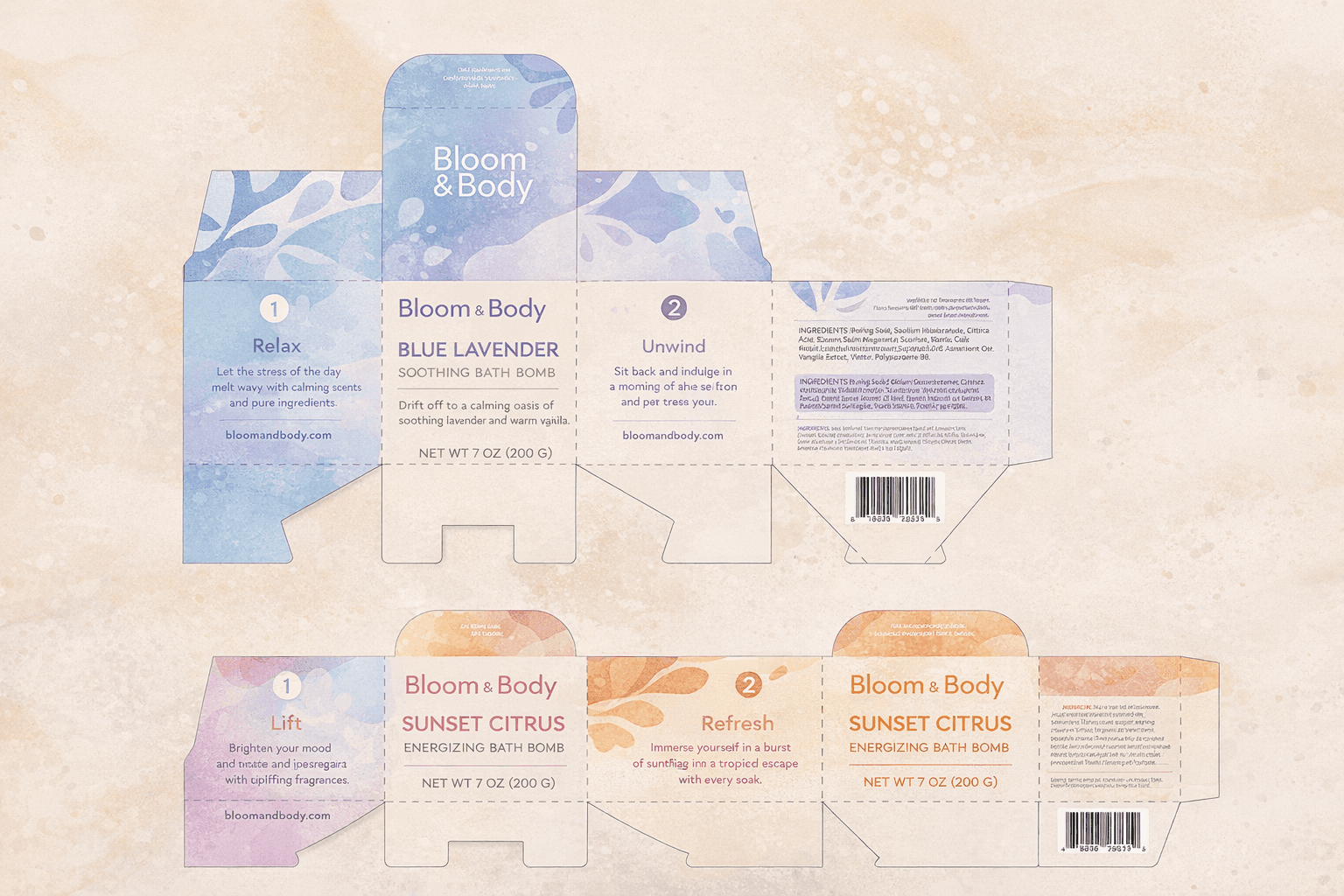
Concept options are fewer and more considered. Each direction has to be defensible from first principles — why this hierarchy, why this colour, why this structural decision. Research from ClearBags puts the average shopper decision window at around seven seconds. For a brand with no existing recognition equity, those seven seconds carry the entire commercial argument. There is no room for a concept that looks good in a PDF but loses the argument at shelf.
We also address print and production constraints earlier. A design that requires a specification the budget cannot support is a failed brief, regardless of how strong the creative is.
What Brands Need to Bring
The process works when both sides are honest. Sleeve Office brings the shelf context, the category analysis, and a structured approach to high-stakes briefs. But we cannot replace what only the brand knows.
The most useful thing a founder can bring is precision, not polish. What is the actual retail window? What did the buyer say, specifically? What does the brand stand for in one sentence that does not contain the word "quality"?
As Canny Creative note, a brief should leave the agency with no need to guess. That is the standard we hold our clients to — not to make their lives harder, but because assumptions are what the shelf exposes first.
Frequently Asked Questions
What should a first-launch packaging brief include?
It should cover the commercial objective in precise terms, the target shopper in a specific retail context, the visual and messaging hierarchy, technical constraints such as print method and lead time, and a named competitive set. Replace vague descriptors with specific definitions or references.
Why does the brief matter more for a single-shot launch?
Established brands have recognition equity. A first-time launch has none. The packaging must communicate the brand, justify the price, and earn attention in seconds — all without a second attempt if it falls short.
How long does Sleeve Office's discovery process take?
Typically one to two working weeks. For tight retail windows, we can compress the timeline without cutting corners on brief quality.
Final Thoughts
At Sleeve Office, we have seen a weak brief cost brands their retail window before the packaging reaches the shelf. A real commercial opportunity, undone by assumptions that were never questioned. It is why we start on the shelf — and why the brief we build from that point holds.
If you are approaching a launch where there is no margin for error, get in touch with Sleeve Office. Let us help you build a brief that holds.