" height="31.24706260921927px" id="nbJgwzqVl" transform="translate(0 0.753)" width="19.57646915609603px"/><path d="M 0 9.964 C 0 4.127 3.418 0 9.783 0 C 16.148 0 19.743 4.186 19.743 9.964 L 19.743 21.283 C 19.743 27.061 16.148 31.247 9.783 31.247 C 3.418 31.247 0 27.12 0 21.283 Z M 7.838 9.551 L 7.838 21.755 C 7.838 23.465 8.663 24.526 9.901 24.526 C 11.138 24.526 11.963 23.465 11.963 21.755 L 11.963 9.551 C 11.963 7.723 11.138 6.721 9.901 6.721 C 8.663 6.721 7.838 7.723 7.838 9.551 Z" fill="rgb(255, 255, 255)" height="31.247058794077702px" id="KjHS4S5x_" stroke-dasharray="" stroke-linecap="butt" stroke-linejoin="miter" stroke-miterlimit="10" stroke-width="0.38" stroke="rgb(255, 255, 255)" transform="translate(16.313 0.753)" width="19.74260705882354px"/><path d="M 0 9.964 C 0 4.127 3.418 0 9.783 0 C 16.148 0 19.743 4.186 19.743 9.964 L 19.743 21.283 C 19.743 27.061 16.148 31.247 9.783 31.247 C 3.418 31.247 0 27.12 0 21.283 Z M 7.838 9.551 L 7.838 21.755 C 7.838 23.465 8.663 24.526 9.901 24.526 C 11.138 24.526 11.963 23.465 11.963 21.755 L 11.963 9.551 C 11.963 7.723 11.138 6.721 9.901 6.721 C 8.663 6.721 7.838 7.723 7.838 9.551 Z" fill="rgb(7, 59, 58)" height="31.247058794077702px" id="MG5ESk6qo" transform="translate(17.762 0.753)" width="19.74260705882353px"/><path d="M 0 1.882 C 0 0.843 0.843 0 1.882 0 L 19.576 0 C 20.616 0 21.459 0.843 21.459 1.882 L 21.459 6.024 L 0 6.024 Z" fill="rgb(255, 255, 255)" height="6.023529411764706px" id="Wezeqb1qb" transform="translate(7.906 25.976)" width="21.458823529411763px"/></svg>)
Packaging That Gets Picked: What It Actually Takes for a Food Brand to Win on Shelf
Packaging wins at shelf when it communicates the right thing to the right shopper in under three seconds. That means a clear hierarchy, a distinctive visual identity, and a design that earns trust before a single word is read. Colour, typography, material, and finish all play a role — and getting any one of them wrong can mean your product gets overlooked, no matter how good what's inside actually is.
Why Packaging Is Your First (and Most Important) Sales Pitch
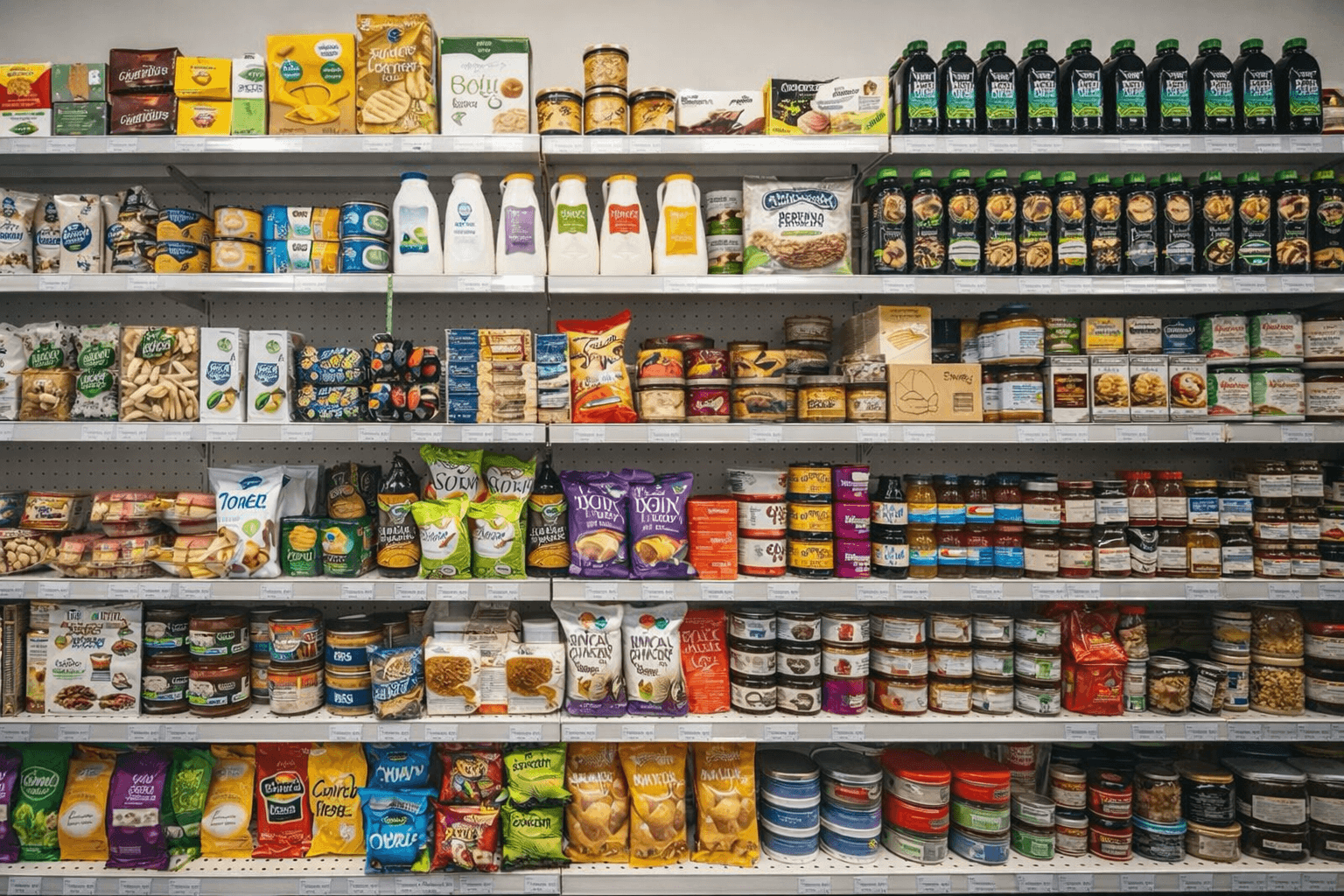
For most food brands, packaging is the only marketing that's guaranteed to reach every potential buyer. Ads can be skipped. Social content gets missed. But the pack is always there, right at the moment of decision.
Research from consumer behaviour surveys consistently shows that around 72% of shoppers say packaging design heavily influences what they buy. That's not a marginal nudge — that's the majority of purchase decisions happening at shelf, in real time, based on what the pack communicates.
The stakes are high because shelf shopping is fast, low-involvement, and often habitual. Studies in food retail environments show that shoppers typically make decisions with limited cognitive effort, often falling back on familiar cues or being pulled by what catches their eye first. If your pack doesn't do its job in the first moment, it won't get a second chance.
This is why packaging isn't a branding afterthought. It's your primary sales tool — and it deserves to be treated that way.
The Three-Second Rule: What Happens Before a Shopper Consciously Decides
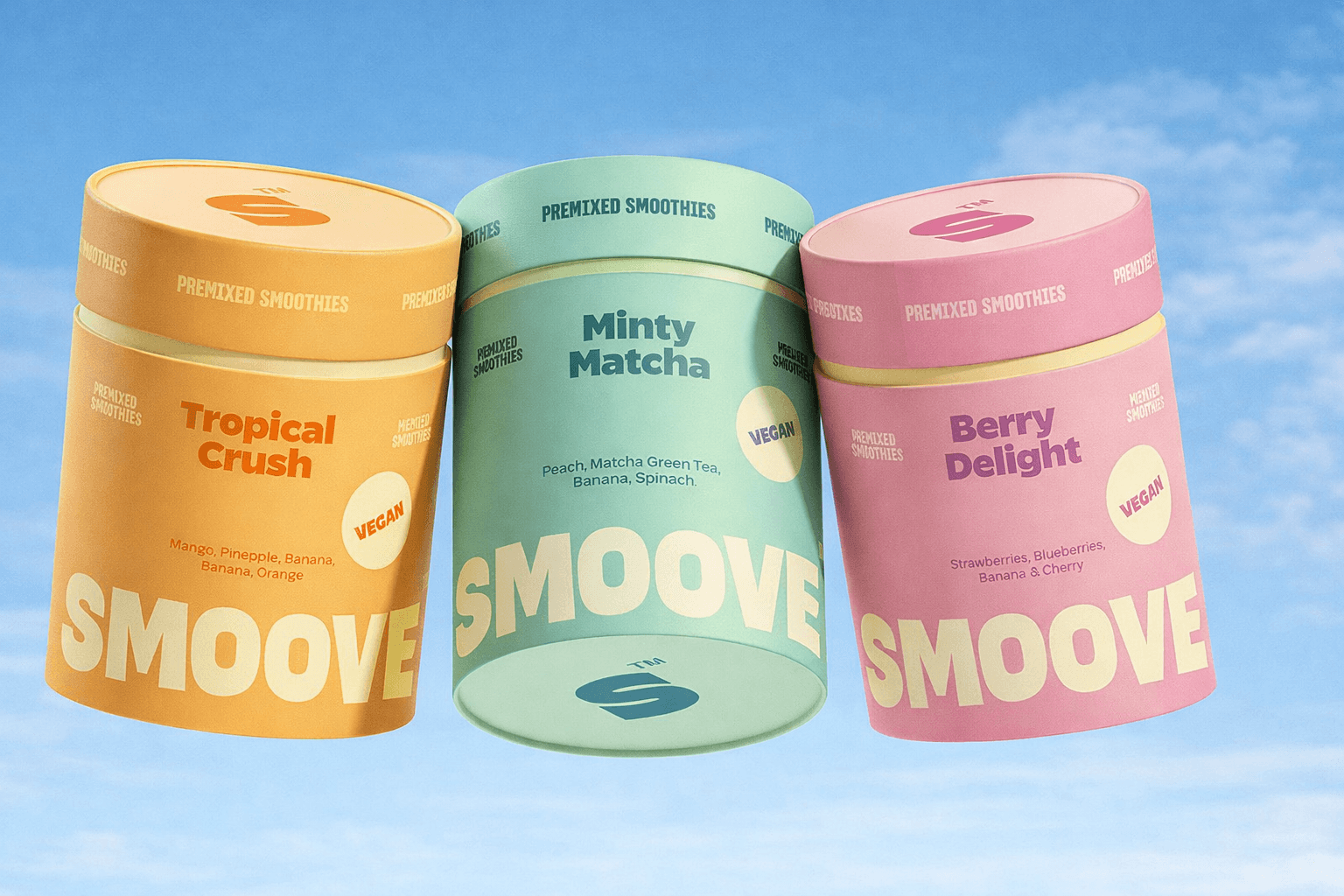
Shoppers don't read their way to a purchase. They scan. Eye-tracking research into consumer behaviour at shelf shows that visual attention moves through two distinct stages: a fast, non-selective sweep that gives a general sense of what's there, followed by a slower, selective evaluation of specific products that caught the eye. Most packs never make it to the second stage.
The physical features of your pack — colour, shape, and texture — are what drive initial attention. Once a product is noticed, shoppers begin reading semantic cues: the brand, imagery, and text. This sequence is well established in packaging research, and it has a direct implication for design. Visual disruption gets you noticed. Clarity gets you chosen.
Eye-tracking studies show that consumers scan packs in predictable patterns, often starting near the centre and moving outward. Designers who understand these patterns place the most important information — usually the brand and key product claim — exactly where attention lands first. That's not accident. That's intentional hierarchy.
Visual Hierarchy: The Real Reason Some Packs Get Picked Up
Good packaging doesn't ask shoppers to work for information. It leads them through it in a predetermined sequence: brand first, product name second, one key benefit third.
Packaging design guides consistently identify a four-tier hierarchy: primary information (brand and product name), secondary information (benefits and variants), tertiary information (nutritional claims and certifications), and quaternary information (ingredients and fine print). The job of design is to make these distinctions unmistakably clear — not just legible up close, but readable from across the aisle.
This is where many food brands go wrong. When a pack tries to communicate too much at once, it creates visual noise. Claims compete with certifications, certifications compete with imagery, and imagery competes with the brand name. The result is cognitive overload — and shoppers move on.
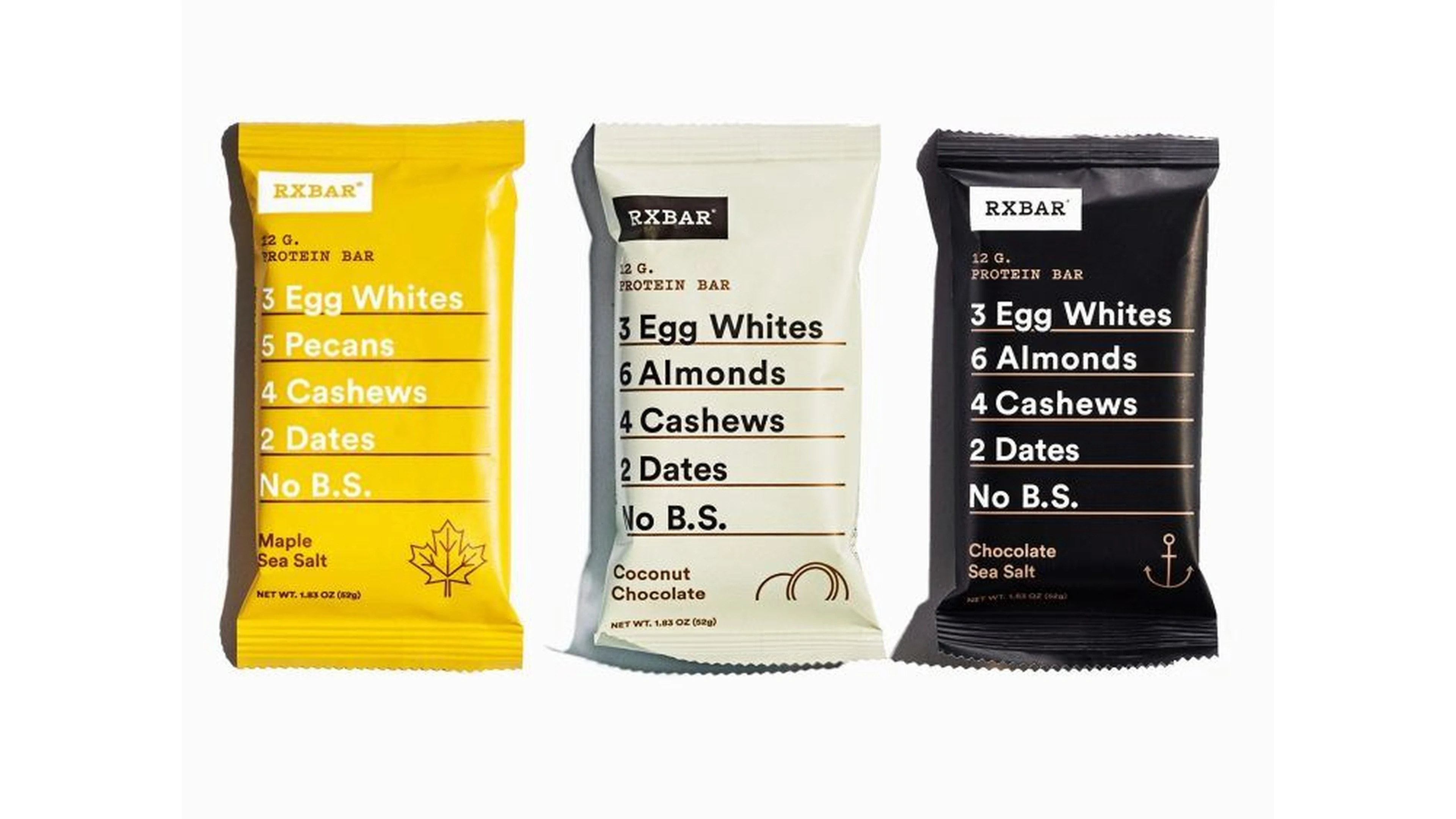
The brands that consistently win at shelf do the opposite. They ruthlessly edit. They make the primary information impossible to miss, and they let the rest follow naturally. RXBar is a well-known example: by turning ingredient transparency into the lead design element, they inverted typical hierarchy conventions and created a pack that stood apart in a crowded category. Hostess achieved something similar in their 2024 rebrand — a cleaner logo, bolder colours, and a simplified layout that tested two-to-one better than the previous design.
Simplicity is not laziness. It's one of the hardest things to get right in packaging.
Colour and Typography Are Doing More Work Than You Think
Colour is one of the fastest communicators in design. Before a shopper reads a single word, your colour palette has already told them something about your product's positioning, values, and intended buyer. Research into colour psychology in food packaging shows that warm tones work well for indulgent or treat-led products, while cooler tones better suit health-oriented and functional foods — because they align with how shoppers already process these categories visually.
Blue packaging, for example, has been found to increase perceived healthiness by 27% compared to red, while green consistently reads as natural or eco-conscious. These aren't arbitrary associations — they're deeply embedded in how consumers have been conditioned to read shelves. Working with them, rather than against them, is almost always the smarter move.
Typography carries similar weight. Bold, legible typography has become a dominant trend in food packaging, and for good reason: it forces clarity. When the type does the work, clutter falls away. But typography also signals tone. A rounded, approachable font reads differently from a sharp serif — and both read differently depending on the material they're printed on. Bold sans-serif fonts, for instance, work well on cardboard, while fine serif details suit smooth, coated papers.
A strong typographic system across a product family creates cumulative shelf impact. When your brand blocks consistently on shelf — same structure, same weight, same rhythm across SKUs — shoppers learn to recognise you from a distance. That kind of recognition builds loyalty quietly, over time.
Material, Finish, and Sustainability: What Shoppers Are Actually Judging
The surface of your packaging communicates quality before the design even registers. Matte finishes often feel premium. Foil or gloss can signal indulgence. Cardboard reads as more sustainable and considered than plastic — and research confirms that cardboard packaging is consistently rated as more sustainable and more premium than equivalent plastic packaging.
Sustainability is now a genuine shelf signal, not just a background consideration. McKinsey's 2025 global packaging research shows that food safety and shelf life are consumers' top packaging priorities, but clear recyclability labelling and sustainability credentials are increasingly important — particularly among younger buyers. The brands that communicate this clearly and credibly gain trust at shelf. The brands that overclaim or greenwash are starting to face serious legal and reputational risk, especially as new regulations tighten in the UK and EU.
Consumer trust in food brands' sustainability claims is declining: 38% of consumers globally now say they don't trust F&B companies' sustainability efforts, and 71% want greater transparency. This isn't a reason to shy away from sustainability messaging — it's a reason to make it specific, honest, and verifiable. On-pack certifications, QR codes that link to sourcing information, and clear recycling instructions all do real work here.
The broader point is this: material choice is part of your brand story. Treating it as a cost consideration alone misses what it communicates to the shopper holding your pack.
Frequently Asked Questions
What makes food packaging stand out on the shelf?
Effective packaging stands out through a combination of clear visual hierarchy, distinctive colour, and confident typography — all designed to communicate the brand and key product benefit within three seconds. Clutter undermines shelf impact. Simplicity and a strong sense of visual identity consistently outperform busy or overloaded designs.
How important is colour in food packaging design?
Colour is one of the most powerful and immediate communicators in packaging design. It signals category, positioning, and product values before a shopper reads a single word. Warm tones suit indulgent products; cooler tones work better for health-led ranges. Colour consistency across a product family also creates stronger shelf blocking and brand recognition.
Does sustainable packaging actually influence food purchases?
Increasingly, yes — but with nuance. Consumers prioritise food safety, quality, and value above sustainability, but clear sustainability credentials do build trust and can be a deciding factor when products are otherwise comparable. Vague or overclaimed sustainability language is losing credibility. Specific, verifiable claims backed by certification carry far more weight.
How many claims should be on the front of a food pack?
Fewer than most brands think. The front panel should prioritise product name, variant, and one core benefit. Research consistently shows that one to three clear proof points works better than a crowded front face. Additional information belongs on secondary panels, where it supports rather than competes with the primary message.
When should a food brand consider a packaging redesign?
When the pack no longer clearly communicates who it's for, what makes it different, or why a shopper should choose it over the alternatives. If your brand has evolved but the packaging hasn't, there's almost certainly a disconnect. A redesign doesn't always mean starting from scratch — often it means editing, sharpening, and bringing more clarity to what's already there.
Final Thoughts
At Sleeve Office, we've seen packaging decisions made at the last minute, with budget squeezed and timelines compressed, and the result is almost always a pack that underperforms at shelf, not because the product isn't good, but because the design isn't doing its job. The brands that treat packaging as a strategic investment, not a production task, are the ones that build recognition, earn trust, and grow. If your packaging isn't getting picked, it's worth asking why — and doing something about it.
If you're ready to take your packaging seriously, get in touch with Sleeve Office. We'd love to help you build something that actually gets picked.